Author Archives: Social Media OTR Web

From Field to Feed

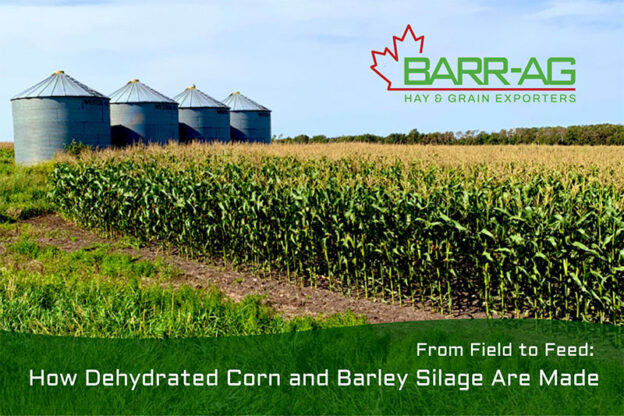
From Field to Feed: How Dehydrated Corn and Barley Silage Are Made

When people think about livestock feed, they often picture hay bales neatly stacked in a field. While hay remains an essential forage source, silage plays an equally important role in providing consistent, high-quality nutrition for beef and dairy operations.

At Barr-Ag, we take that one step further by producing dehydrated corn silage and dehydrated barley silage, combining traditional silage production with modern processing technology to create a stable, easy-to-handle forage product.

But how does silage go from a growing crop to a premium feed? Let’s take a closer look.

Step 1: Planting the Crop

The process begins long before harvest.

Corn and barley varieties are carefully selected based on their suitability for silage production, considering factors such as yield, digestibility, and nutritional value. Throughout the growing season, weather, soil conditions, and crop management all influence the final quality of the forage.

Healthy crops are the foundation of quality feed.

Step 2: Harvesting at the Right Time

Timing is everything when producing silage.

Unlike grain crops, silage is harvested as the entire plant. The goal is to capture the crop when it has reached the ideal balance between moisture, starch development, fibre digestibility, and overall nutritional value.

Harvesting too early can reduce energy content, while harvesting too late can make the crop more difficult to pack and ferment properly.

Experienced growers monitor crop maturity closely to ensure the best possible harvest window.

Step 3: Chopping the Crop

Once the crop reaches its ideal maturity, specialized forage harvesters chop the entire plant into small, uniform pieces.

The correct chop length helps improve packing density while creating a consistent feed that is easier for livestock to consume and digest.

Uniform particle size is also essential for successful fermentation.

Step 4: Building and Packing the Silage Pit

After chopping, the silage is transported to a bunker or pit where it is packed in thin layers using heavy equipment.

Proper packing removes oxygen from the forage, creating the anaerobic environment needed for fermentation.

This step is one of the most important in the entire process. Poor packing can lead to spoilage, heating, and nutrient loss.

Once the pit is filled, it is carefully sealed with plastic to keep oxygen out and protect the forage during storage.

Step 5: The Fermentation Process

Now nature takes over.

During fermentation, naturally occurring lactic acid bacteria convert plant sugars into organic acids. As the pH drops, the forage becomes stable and well preserved.

At Barr-Ag, our silage remains sealed for a minimum of 90 days, allowing fermentation to fully stabilize before it is opened for feeding or further processing.

This preservation process helps maintain valuable nutrients while reducing spoilage.

Step 6: Processing and Dehydration

Once fermentation is complete, Barr-Ag processes the silage using specialized dehydration equipment.

Removing moisture creates a product that is easier to transport, store, and handle while helping preserve the nutritional value s of the original crop.

The dehydration process also provides greater consistency from bale to bale and significantly extends shelf life compared to conventional silage.

Step 7: Baling and Storage

After dehydration, the silage is compressed into high-density bales for efficient storage and transportation.

The finished product is clean, uniform, and convenient to handle, whether it’s being delivered to local producers or shipped to customers around the world.

Consistent packaging also helps simplify inventory management and feeding operations.

Why Dehydrated Silage?

Traditional silage has long been valued for its excellent nutritional profile, but dehydrated silage offers additional advantages for many operations.

Some of the benefits include:

● Longer shelf life
● Easier transportation over long distances
● Reduced storage concerns
● Consistent moisture levels
● Convenient handling and feeding
● Excellent option for export markets

These advantages make dehydrated corn and barley silage an attractive solution for producers looking for reliable forage throughout the year.

Quality Starts in the Field

Producing premium silage isn’t the result of a single step—it’s the outcome of careful management throughout the entire process.

From selecting the right crop and harvesting at the optimal stage to proper fermentation, dehydration, and packaging, every stage contributes to the quality of the final product.

At Barr-Ag, we’re committed to producing forage products that deliver consistency, reliability, and nutritional value for livestock producers both across North America and around the world.

Whether you’re feeding beef cattle, dairy cows, or other livestock, understanding how silage is produced helps explain why quality begins long before the feed reaches the bunk.

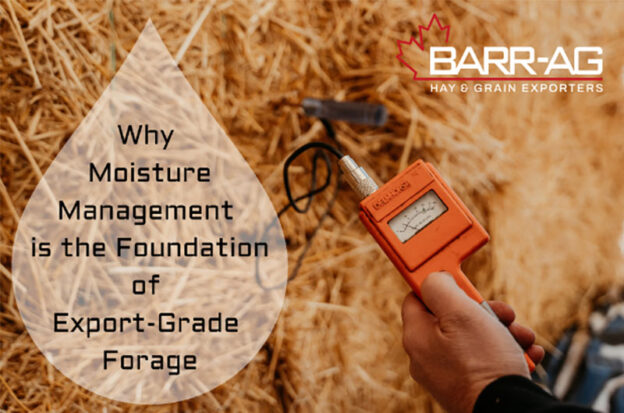
Why Moisture Management Is the Foundation of Export-Grade Forage

Why Moisture Management Is the Foundation of Export-Grade Forage

When evaluating forage quality, most buyers focus on protein, fiber, digestibility, and relative feed value. While these metrics are important, one critical factor often determines whether forage maintains its nutritional value from harvest to feeding: moisture management.

Proper moisture management is the foundation of producing and delivering export-grade forage. From the moment a crop is cut until it reaches the end user, moisture levels must be carefully monitored and controlled to prevent mold, heating, spoilage, and nutrient loss.

Whether the product is alfalfa, timothy, mixed hay, straw, or silage, managing moisture correctly helps preserve forage quality and protects the value of every bale.

Quality Starts in the Field

The moisture management process begins immediately after harvest.

Freshly cut forage contains a significant amount of moisture that must be reduced through proper curing before baling. The goal is to remove enough moisture to ensure safe storage while preserving leaves, colour, and nutritional value.

Baling forage too wet can create serious challenges:

  • Mold growth
  • Excessive heating
  • Nutrient degradation
  • Reduced palatability
  • Increased risk of spoilage during storage or transit

On the other hand, allowing forage to become excessively dry can increase leaf loss, particularly in alfalfa and other legume crops, resulting in reduced feed value.

Achieving the proper moisture balance is one of the most important decisions during harvest.

Why Moisture Matters for Nutritional Value

Many producers recognize that excessive moisture can cause mold, but fewer realize how significantly it can affect forage nutrition.

When moisture levels are too high, biological activity continues within the bale. This activity generates heat and can lead to nutrient losses over time.

Excessive heating may:

  • Reduce protein availability
  • Lower energy value
  • Decrease digestibility
  • Cause discoloration and quality deterioration

Forage that initially tested well can lose nutritional value if moisture is not properly managed during storage.

Maintaining appropriate moisture levels helps preserve the protein, energy, fibre characteristics, and overall feed quality that livestock producers depend on.

Preventing Mold and Heating

Mold and heating are among the most common causes of forage quality loss.

When excess moisture remains trapped within a bale, microorganisms can continue to grow and reproduce. As microbial activity increases, temperatures inside the bale rise.

This process can result in:

  • Mold development
  • Musty odours
  • Reduced feed intake
  • Increased waste
  • Loss of marketability

In severe cases, excessive heating can create fire risks within forage storage facilities.

Careful moisture management, combined with proper storage practices, significantly reduces these risks and helps maintain forage quality throughout the supply chain.

The Importance of Testing and Monitoring

Producing export-grade forage requires more than visual inspection.

Moisture testing provides valuable information throughout the harvest and storage process, helping ensure forage is baled and stored under appropriate conditions.

Regular testing allows producers and processors to:

  • Verify moisture levels before baling
  • Monitor stored inventory
  • Maintain consistent product quality
  • Reduce spoilage risk
  • Meet customer specifications

Accurate testing helps support quality assurance programs and provides confidence that forage will perform as expected upon delivery.

Storage Conditions Matter

Even properly cured forage can lose quality if storage conditions are inadequate.

Protecting forage from moisture after harvest is just as important as achieving the correct moisture level before baling.

Best practices include:

  • Storing forage in well-maintained facilities
  • Protecting inventory from precipitation and ground moisture
  • Promoting adequate airflow
  • Monitoring storage conditions regularly
  • Handling bales carefully to preserve integrity

Effective storage management helps maintain forage quality from harvest through shipment and feeding.

Moisture Management Across All Forage Types

Although moisture targets vary between products, moisture management is essential across all forage categories.

For example:

  • Alfalfa requires careful curing to preserve leaves and protein.
  • Grass hay benefits from proper drying to maintain colour and digestibility.
  • Straw must remain dry to prevent mold and storage losses.
  • Silage depends on controlled moisture levels to support proper fermentation and feed stability.

Regardless of forage type, moisture management directly influences product quality, consistency, and performance.

Building Confidence Through Quality Control

Forage buyers around the world depend on consistent quality and reliable performance. Achieving those standards starts long before a bale is loaded for shipment.

Proper curing, moisture testing, handling, and storage practices work together to preserve nutritional value and ensure forage arrives in the condition customers expect.

At Barr-Ag, we understand that moisture management is one of the most important factors in maintaining forage quality. Our focus on proper handling, testing, and storage helps ensure customers receive forage products that meet demanding domestic and international requirements.

To learn more about our forage programs or discuss your forage requirements, contact Barr-Ag today.

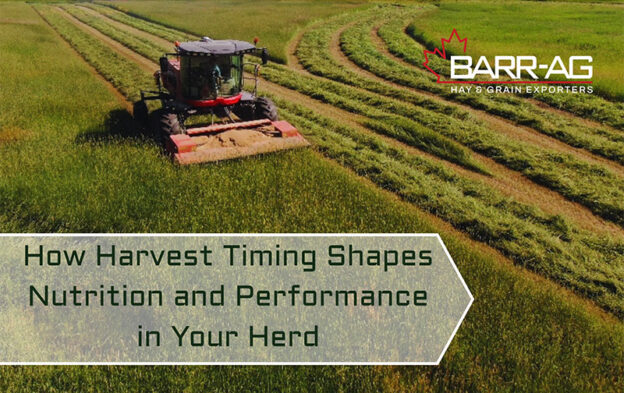
How Harvest Timing Shapes Nutrition and Performance in Your Herd

How Harvest Timing Shapes Nutrition and Performance in Your Herd

When it comes to forage quality, timing is everything.

A few days can make a noticeable difference in protein levels, fiber content, digestibility, and ultimately how your herd performs. Whether you are feeding dairy cows, beef cattle, horses, sheep, or goats, understanding the impact of harvest timing can help you make better purchasing and feeding decisions throughout the season.

The Growth Stage Matters More Than Most Producers Realize

As forage crops mature, the plant naturally shifts from producing leafy, nutrient-dense growth to developing more structural fiber and seed material. This is true across nearly all forage types, including alfalfa, timothy, orchard grass, mixed hay, silage, and straw products.

Early-cut forage is typically:

  • Higher in protein
  • Lower in fiber
  • More digestible
  • Softer and more palatable
  • Higher in energy

Later-cut forage is generally:

  • Lower in protein
  • Higher in fiber and lignin
  • Less digestible
  • Coarser in texture
  • Better suited for maintenance diets or dry animals

The challenge each season is balancing yield and quality. Waiting longer often increases tonnage per acre, but nutritional quality steadily declines as the crop matures.

Protein Levels Decline Quickly with Maturity

Protein is one of the first nutrients affected by delayed harvest timing.

In early vegetative growth stages, plants contain a high proportion of leaves, which are rich in crude protein. As the crop matures, stem development increases and leaf-to-stem ratio declines. This causes overall protein levels to drop.

For example:

  • Early-cut alfalfa may test above 20% crude protein
  • Mid-bloom alfalfa can drop significantly lower
  • Mature grass hay may contain only moderate protein levels suitable for maintenance feeding

For high-performance animals such as lactating dairy cows, growing calves, or performance horses, that protein difference can directly impact production and body condition.

Fiber Increases as Forage Gets Older

As forage matures, structural carbohydrates such as NDF (Neutral Detergent Fiber) and ADF (Acid Detergent Fiber) increase.

Higher fiber levels reduce:

  • Digestibility
  • Dry matter intake
  • Energy availability

This is especially important in dairy and feedlot rations where maximizing intake and feed efficiency is critical.

Lower digestibility means animals simply cannot extract as much usable nutrition from the forage.

Even if yields are higher, performance may suffer if quality declines too far.

Digestibility Drives Performance

Digestibility is often one of the most overlooked forage quality factors, yet it has one of the biggest impacts on animal performance.

Highly digestible forage supports:

  • Better feed conversion
  • Improved milk production
  • Higher average daily gain
  • Healthier rumen function
  • Reduced supplemental feed requirementsBetter feed conversion
  • Improved milk production
  • Higher average daily gain
  • Healthier rumen function
  • Reduced supplemental feed requirements

Earlier-harvested forage generally contains less lignin, allowing animals to break down and utilize nutrients more efficiently.

For horse owners, digestibility and softness also contribute to safer, more consistent feeding programs with reduced sorting and waste.

Palatability Affects Intake

Animals will almost always consume softer, leafier forage more readily than coarse, stemmy material.

Palatable forage encourages:

  • Higher intake
  • More consistent feeding behavior
  • Less waste
  • Better overall condition

This becomes particularly important during periods of stress, heat, transition feeding, or when managing young or high-producing animals.

Even the best forage analysis means little if animals refuse to eat enough of it.

Weather and Timing Work Together

Harvest timing is not only about plant maturity — it is also heavily influenced by weather conditions.

Producers must constantly balance:

  • Nutritional targets
  • Rain forecasts
  • Moisture levels
  • Field conditions
  • Drying windows

Cutting early may preserve nutrition, but weather delays can impact color, leaf retention, and overall quality. That is why premium first-cut forage is often limited and highly sought after each season.

Matching Forage to the Right Feeding Program

Not every operation requires ultra-premium dairy-quality forage. The ideal harvest stage depends on the class of livestock being fed.

Higher-quality early-cut forage is typically best suited for:

  • Lactating dairy cattle
  • Young growing animals
  • Feedlot starter rations
  • Performance horses
  • Breeding stock

More mature forage can still provide excellent value for:

  • Dry cows
  • Maintenance diets
  • Backgrounding programs
  • Beef cow wintering rations

The key is understanding what your animals need and sourcing forage that matches those nutritional goals.

Plan Early for First-Cut Forage Availability

Every season, demand for high-quality early-cut forage moves quickly. Once premium first-cut inventory is committed, availability can become limited.

Joining an early-season buyer list helps secure access to:

  • First-cut allocations
  • Preferred forage specifications
  • Consistent supply programs
  • Priority booking opportunities

If securing premium forage quality is important for your feeding program, now is the time to start planning ahead for the upcoming harvest season.

To learn more about our forage programs or discuss your operation’s nutritional requirements, contact Barr-Ag to secure your early-season forage allocations.

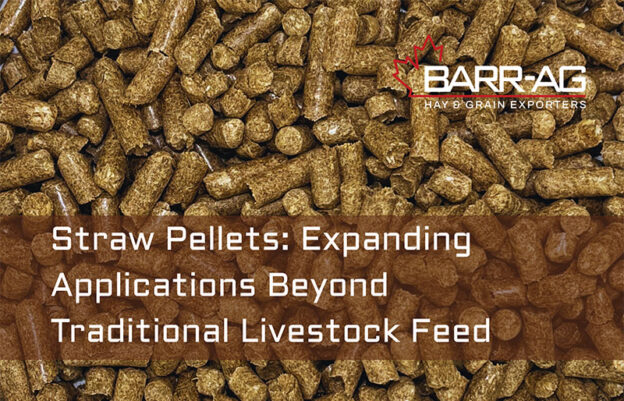
Straw Pellets: Expanding Applications Beyond Traditional Livestock Feed

Straw Pellets: Expanding Applications Beyond Traditional Livestock Feed

Material consistency is becoming a growing challenge across both agriculture and industrial operations. Wood shavings, loose straw, and other traditional materials are often inconsistent from load to load, difficult to store and transport, and increasingly subject to availability and pricing pressure. As a result, more operations are looking at alternative materials that offer greater reliability without adding complexity.

What straw pellets are

Straw pellets are made from agricultural straw that is ground and compressed into a dense, uniform format. This process creates a consistent fibre material that is easier to handle, store, and transport than loose straw. Their compact form reduces storage requirements and improves logistics, while their uniform size and density allow for more predictable performance across a range of applications.

Traditionally, straw pellets have been used within livestock systems as a fibre component in ruminant feed, as part of ration balancing, and in some cases as supplemental bedding. Their value in these roles comes from consistency—delivering a controlled input where variability in raw materials can create challenges in both feeding and management.

Expanding applications across agriculture and industry

More recently, straw pellets have moved well beyond their traditional role in livestock nutrition. In animal agriculture, they are increasingly used as bedding in cattle, equine, and poultry operations, as well as for smaller animals such as rabbits and guinea pigs. When exposed to moisture, the pellets break down and expand into a soft, absorbent layer, helping improve moisture control while maintaining a more uniform bedding surface. This can simplify handling, reduce variability, and create more consistent day-to-day conditions in barns and facilities.

Outside of livestock use, straw pellets are also being adopted in industrial and environmental settings. Their natural absorbency makes them suitable for spill control, moisture management, and general site use in sectors such as oilfield operations and facility maintenance. In environments where handling efficiency and cleanliness matter, a compact and consistent material offers practical advantages over loose alternatives.

They are also being used as a carbon input in composting systems, contributing to soil improvement once broken down, and in some regions as a biomass feedstock for renewable energy systems. At the same time, there is growing interest in agricultural by-products as part of broader sustainability and material substitution trends, particularly in packaging and industrial inputs.

Why consistency is driving adoption

A key reason for the shift toward pelletized straw is the need for consistency. Pelletizing changes the behaviour of the material by creating uniform size, density, and moisture characteristics. This improves predictability across applications, whether the end use is bedding, feed, or industrial absorbency.

The compact format also simplifies storage and transport, reducing volume requirements and improving handling efficiency. When exposed to moisture, controlled expansion increases coverage and usability, particularly in bedding and absorbent applications. For many operations, the value is not only in the material itself, but in the reliability of how it performs day to day.

Straw pellets compared to wood shavings

Straw pellets are increasingly being evaluated alongside traditional wood shavings, especially in bedding and absorbent uses. Wood shavings remain widely used, but their supply is closely tied to lumber production, which can lead to fluctuations in availability and pricing.

Straw pellets offer a more stable alternative due to the consistent availability of agricultural straw as a raw material. In addition to supply stability, pellets provide more uniform performance characteristics, particularly in moisture absorption and handling. Their compact nature also reduces storage space requirements and improves transport efficiency.

Rather than replacing wood shavings entirely, straw pellets are often being introduced where consistency, cost stability, and supply reliability are becoming more important operational factors.

Sustainable solutions and multi-purpose us

Within this evolving market, Barr-Ag is expanding its role with the introduction of a multi-purpose straw pellet program designed to support a range of applications. This includes livestock feed components, bedding for livestock and equine operations, and industrial uses such as oilpatch absorbents and moisture control materials.

A key focus of this expansion is providing a practical, agricultural-based alternative in markets where traditional materials like wood shavings are facing supply and cost pressures. Straw pellets offer a scalable and consistent option that can be produced and delivered in a controlled format.

Barr-Ag supplies straw pellets in multiple formats, including 20 kg bags, 700 kg totes, and bulk supply for larger operations and export markets. This flexibility supports use across different sectors, from on-farm applications to industrial and international demand.

As interest continues to grow in more reliable and efficient material solutions, straw pellets are increasingly being positioned as a multi-purpose input across agriculture, industry, and environmental applications. Their role continues to expand as operations prioritize consistency, handling efficiency, and supply stability.

For more information or to discuss your requirements, please contact us.

Adapting Forage Supply in Changing Markets

Adapting Forage Supply in Changing Markets: How Regional Agriculture Can Protect Your Operation

Agriculture has always relied on trade, with hay, grain, and forage products moving across borders daily to support livestock operations. Yet ongoing changes in tariffs, transportation costs, and logistics have increased uncertainty, leading many buyers to place greater value on regional sourcing across North America to maintain consistency, reduce risk, and adapt quickly.

In our previous article on forage quality, we explored how moisture, harvest timing, and storage practices affect hay and silage performance. Equally important is how that forage moves through the supply chain; when trade conditions or transportation become unpredictable, supply chain structure can be just as important as forage quality. Shifting tariffs and logistics reinforce how quickly trade conditions can change, making regional supply, including cross-border sourcing within Canada and the U.S., a critical strategy for maintaining dependable supply.

Market Conditions Can Change Quickly

While global trade provides many advantages, it also depends on complex logistics networks. Shipping routes, port schedules, container availability, fuel costs, and tariffs all influence how efficiently products move between countries.

Recent global events, including geopolitical tensions in the Middle East, have demonstrated how quickly these systems can shift. Rerouted shipping lanes, higher fuel costs, and changes in trade policy can affect delivery timelines and overall transportation costs. For buyers who rely heavily on imported forage, these factors create uncertainty around both pricing and availability, highlighting the importance of domestic and regional sourcing.

The Value of Regional Forage Supply

Regional suppliers can help balance these uncertainties. Shorter supply chains mean fewer transportation steps, fewer delays, and more predictable deliveries. Local suppliers can also respond quickly when feeding programs need adjustment or additional forage.

Supporting regional producers strengthens domestic agricultural capacity. Forage that travels shorter distances often arrives fresher and reduces exposure to tariffs and transportation costs while contributing to a more resilient and reliable supply system. In times of global uncertainty, relying on North American sourcing is both practical and strategic.

A Balanced Approach to Supply

Experienced buyers often balance international and regional relationships. If international logistics slow down or tariffs increase costs, regional suppliers can fill gaps. If local production is limited by weather or seasonality, global markets provide additional options. Diversifying supply paths protects feeding programs and supports a stable, resilient forage system.

Working With Barr-Ag

At Barr-Ag, we take pride in serving clients across Canada and the United States. While we export Alfalfa, Timothy, Mixed Hay, Silage, and Straw products worldwide, we also work closely with domestic buyers who value a consistent forage supply.

With experience in both export logistics and large-scale forage production, Barr-Ag supports buyers who require consistent product quality and dependable delivery. In today’s evolving market conditions, building strong relationships with both domestic and global suppliers helps livestock operations maintain a stable supply.

Reach out to Barr-Ag to secure reliable, locally sourced forage and see how we can support your operation. Email us directly at [email protected].